
Blog

DIY Elderberry Syrup
Why elderberry? Because it is an immunomodulator! It helps the body adjust its immune level, without sending it into overdrive. Considered to be anti-viral, elderberry can sometimes disarm a virus and flush it out of the body before it has a chance to duplicate itself and set up housekeeping.
DIY Elderberry Syrup
Lisa Purdy ND, MH
Elderberries are back! Available and in stock, now is the time to make your elderberry syrup to have on hand for the winter cold & flu season.
Why elderberry? Because it is an immunomodulator! It helps the body adjust its immune level, without sending it into overdrive. Considered to be anti-viral, elderberry can sometimes disarm a virus and flush it out of the body before it has a chance to duplicate itself and set up housekeeping. The herb contains compounds that are active against flu viruses and has historically been used to treat epidemics. Elderberry is useful for nerve problems, back pain, and inflammation of the urinary tract and bladder. Drink as a tea to soothe a sore throat and ease respiratory distress. Elderberries are safe for all ages and children love the taste!

Cautions: Raw berries have laxative and diuretic actions and please note that ALL green parts of the tree are poisonous! Hence the reason for making them into a cooked syrup. Please also note that diabetics need to carefully monitor their blood sugar levels while using elderberries, to prevent low blood sugar. Elderberries work in the same way as blueberries and green beans, by sensitizing the body’s insulin receptors so that more of the insulin produced by the body can be used.
Lisa’s Elderberry Syrup
½ cup dried elderberries (or 1 cup fresh – freeze berries first to make it easier to pick out ALL of the green stems)
1 cinnamon stick 5 cloves
1 Tbsp. fresh ginger, grated 2 cups water
Simmer about 20 minutes in a stainless steel pan, reduce liquid by half.
Strain, squashing berries.
Add 1 cup honey to liquid. Store in refrigerator.
Suggested dose is 1 tsp. every two hours, up to 3 Tbsp. a day for active symptoms. 1 tsp. daily for prevention. Children ½ dose…not for use with infants, because of honey.

Lisa's Favorite Herb for 2020 - Mullein
Now is the time to harvest this fabulous herb! Mullein grows wild in Ohio and in many other states. I have seen it in Colorado and Utah. The first year it grows as a simple rosette of leaves, soft and fuzzy. The second year it sends up a stalk, anywhere from 2-8 feet tall.
Now is the time to harvest this fabulous herb! Mullein grows wild in Ohio and in many other states. I have seen it in Colorado and Utah. The first year it grows as a simple rosette of leaves, soft and fuzzy. The second year it sends up a stalk, anywhere from 2-8 feet tall. As a biennial it lives only two years, then it reseeds and the cycle begins anew. You will find it along roadsides, or building sites, where the earth has been disturbed. It loves poor soil, so will thrive just about anywhere. Try to harvest it in a location free of car exhaust fumes, fertilizers, or pesticides.
Each day I go out to my garden and harvest 4-5 yellow flower petals from each mullein stalk. It is a long process to fill a small bowl. These mullein flowers are like gold, very precious. They cannot be bought…only harvested by hand. The flowers are used to make the best earache oil.
Mullein & Garlic Ear Oil
In the top of a double boiler, place 1 Tbsp. each mullein flowers and chopped garlic. Cover them generously with olive oil, a little over 1 ounce. Fill the bottom half of the pot with water. Place oil half over the water half and simmer lightly for 15-20 minutes. Strain off oil and place into a bottle with a dropper. Use to soothe earaches. Place 3 drops in the ear, follow with a bit of cotton, 1-2 times daily as needed. This oil generally lasts for 6 months, so make a new batch each summer.
After the flowering is done, you can harvest the leaves. I lay the leaves flat to dry on a table. Or you can hang the whole stalk upside down to dry. Once the leaves are dry, I tear them into ½ inch pieces and store in a canning jar. Check the lid after about 3 days, if you find moisture, lay the leaf out to dry a bit longer. Then store it in a cool, dark place. Don’t forget to label your jar with herb name and date.
Dr.Christopher’s Lung & Bronchial Tincture
¾ cup mullein & ¼ cup lobelia
Place dried herbs in pint canning jar. Cover with vodka. Use a piece of plastic over the jar before using the metal lid. Let sit for 14 days, shaking daily. Then strain out herbs and discard. Place tincture in dropper bottles. Use one dropper as needed or 3-4 times a day, to help dispel mucus from the lungs and throat.

I allow the stalk to dry laying in the garden. Then in the fall, I will break up the flowering part to allow the seeds to fall and hopefully, give me mullein for the next year. I am always delighted to find those little fuzzy leaves in my garden. The little first year plants will tolerate being transplanted in the early spring, so you can place them where you want them.
I hope you enjoy making your own herbal medicine with this wonderful herb.
Mullein is my herb favorite for 2020! Have fun!

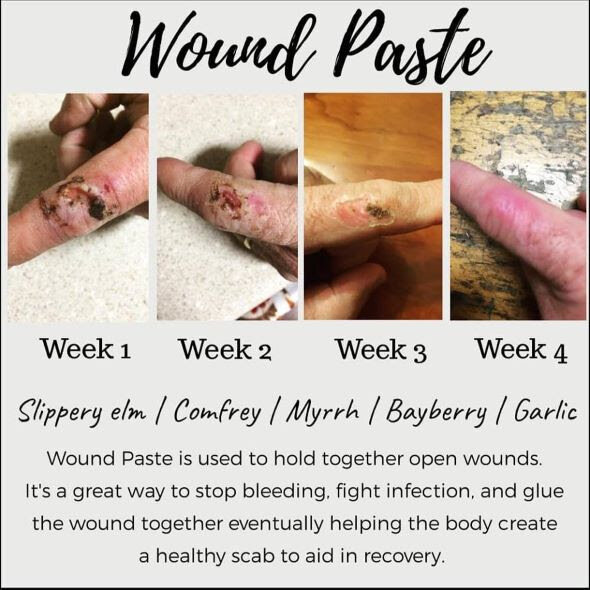
Make Your Own Healing Wound Paste
When you have a wound, let it bleed a bit, that will help to clean it out. Don’t panic. Remember that facial wounds may bleed profusely. I usually will wash off the wound with running water and use colloidal silver on it to disinfect the wound.
Healing Wound Paste
Mix together - 1 Tbsp. of each herb in powder form: comfrey root, slippery elm, myrrh, ½ Tbsp. bayberry root, and ¼ Tbsp. garlic
Store powder in a tightly covered jar. This is a perfect addition to your first aid kit.
When you have a wound, let it bleed a bit, that will help to clean it out. Don’t panic. Remember that facial wounds may bleed profusely. I usually will wash off the wound with running water and use colloidal silver on it to disinfect the wound. Then pour on a bit of the healing wound powder right into the wound and apply pressure to stop the bleeding. Sometimes I will add silver to the powder and apply the paste into the wound. Add more powder as needed and then bandage to keep clean.
The next day add more powder if you need to and put on a clean bandage, but do NOT clean out the wound again. Keep an eye on it, looking for infection. The wound will heal from the inside out. The powder will help to stop the bleeding, and act a bit like stitches to hold the wound together, allowing it to heal from the inside out. Never put the powder on an old or infected wound, as it may actually seal the infection inside the tissue causing a deeper problem. I have used this wound paste many times with my family and seen wonderful healing, many times leaving no scars.
Now is a good time to gather the things you might need for those summer activities with your family. Be prepared with your natural first aid kit!
Have a happy and safe summer!

DIY Beard Oil
Looking for something special to make as a gift for Father’s Day? Try putting together this beard oil. Enjoy the aroma and softness as you go in for a hug or kiss. So you both benefit!
Looking for something special to make as a gift for Father’s Day? Try putting together this beard oil. Enjoy the aroma and softness as you go in for a hug or kiss. So you both benefit!

C-4 Beard Oil
In a 1 oz tincture bottle add 4 drops of each essential oil:
Cedarwood – promotes hair growth
Cypress – promotes follicle stimulation
Copaiba – promotes stress relief
Coffee – promotes energy and is invigorating
Fill the rest of the bottle with fractionated coconut oil – antibacterial, antifungal.
Put a few drops on your hands and rub into the beard after your daily shower.

Summer Time Fun + Sun Without Damage: DIY Recipes!
Summer Time Fun & Sun without Damage. Enjoy the sun, but prevent damage to your skin and hair with these DIY recipes! We have the supplies you need to make them, come on by the shop!
Summer Time Fun & Sun without Damage
Enjoy the sun, but prevent damage to your skin and hair with these DIY recipes! We have the supplies you need to make them, come on by the shop!

OUCH! After Sun Spray
In a 4 oz spray bottle add 5 drops of each essential oil:
Lavender – cell renewal for burns, first aid for insect bites, skin conditions
Peppermint – soothe and cool skin, relieve itchy skin, regenerate nerves
Frankincense – reduces inflammation, prevents scarring, antiseptic, anti-infection
Fill the rest of the bottle with aloe vera juice – cooling and healing to the skin – you might even want to keep a bottle ready in the refrigerator/ice chest for a quick cooling mist. Use After Sun Spray as often as you like to relieve the effects of too much sun.

Meghan’s Summer Hair Care Lotion
In a double boiler, gently melt 1 cup Shea Butter. Move to a bowl and use a mixer to blend it with 2 Tbsp Almond Oil. Will need to mix it about 10 minutes until it becomes a lotion. Then gently mix in 5 drops of each of the essential oils:
Melaleuca (Tea Tree) – a strong antiseptic, antibacterial, and antifungal
Lavender – promotes balance in the body, antiseptic, useful with burns or injury
Rosemary – promotes hair growth, antibacterial, and antifungal
Cedarwood – antiseptic, astringent, reduces oily secretions, psoriasis, calming
Store in a glass jar. Apply the hair care lotion to the ends of hair daily, or apply to the scalp weekly for a deep conditioning treatment. Promotes growth and a healthy glow for your hair. May also be used on psoriasis, eczema, or dry skin.

Make Your Own Essential Oil First Aid Kit
Here are a few suggestions for essential oils to include in a first aid kit, and ways you can use them.

I finally did it! You know how you sometimes have something on your to do list forever? Yep, that was me. I have intended to make an essential oil first aid kit for over a year. I even purchased all the oils and a cute little pouch to carry them in, but I just didn’t take the time to put it together.
We went on a little excursion last week and I needed my oils! One person had a headache, one a nasty bug bite, and one a sunburn…if I only had my oils with me. Sometimes we just need extra motivation. I hope you don’t wait as long as I did to make a kit to carry with you.
Here are a few suggestions for essential oils to include in a first aid kit, and ways you can use them. The oils I put into my kit are fractionated Coconut oil for a carrier, Frankincense, lavender, Lemon, Tea Tree/Melaleuca, Peppermint, Breathe, Deep Blue, and On Guard (blends from doTerra).
* Aches/pain – Deep Blue, Frankincense
* Allergies/antihistamine – Lavender, Lemon, Peppermint (work great together)
* Breath freshener – Peppermint
* Bug bites –, Lavender, Melaleuca, Frankincense
* Burns – Peppermint, Lavender, Frankincense, Melaleuca
* Cuts/bruises – On Guard, Melaleuca, Lavender, Frankincense
* Digestion/upset stomach – Peppermint
* Energy - Lemon
* Hand sanitizer – On Guard, Melaleuca
* Headaches – Peppermint, Lavender, Frankincense
* Sinus inhaler – Breathe
* Sore throat/colds – On Guard
* Stress/sleep – Lavender, Breathe
* Water purification – Lemon

I hope you find this quick reference helpful in using your essential oils on the go. I have a small book called, the Portable Essential Oils, by Anne Kennedy, which would be easy to pack into a suitcase or first aid kit for camping or travel.
Stop by the shop and I can help you put together your first aid kit. My daughter is making one to take on her mission trip this summer. I would be happy to order the cute keychain pouch from doTerra that we are using for you also, just give me a call. Essential Oil First Aid Kit - Don’t leave home without it!

Make Your Own Coffee Scrub
Make your own DIY coffee scrub. I love to use this scrub in the shower. It makes you feel vibrant and ready for the day. I find it improves the look of my skin, reducing cellulite, wrinkles, and age spots. It is excellent for sore muscles and aching joints, increasing circulation to the area.
Make Your Own Coffee Scrub
½ cup coffee grounds
½ cup sea salt
¾ cup fractionated coconut oil – enough to cover
20 drops coffee essential oil
Mix together and use to rub on non-sensitive areas of the body in a circular motion, and then rinse off in the shower. Excellent for areas of cellulite, stored fat, dry skin, and on sore muscles or joints. May be stored in a jar for up to a month.
I love to use this scrub in the shower. It makes you feel vibrant and ready for the day. I find it improves the look of my skin, reducing cellulite, wrinkles, and age spots. It is excellent for sore muscles and aching joints, increasing circulation to the area.
Sea salt is very healing and cleansing. It helps to rid you of negative energy that you may have picked up during the day. So it is useful for those who work with the general public, or do hands-on therapy.
Wonderfully moisturizing for the skin, coconut oil is antibacterial and antifungal.
Coffee essential oil reduces free radical damage, improves mood, reduces fever, stimulates appetite, protects the immune system, aids respiratory health, has anti-aging qualities, reduces nausea, stimulates relaxation, reduces inflammation, and soothes allergic reactions. Coffee essential oil is abundant with antioxidants which help to reduce oxidative stress in the skin, increasing blood flow to those cells. It can help to prevent infections, the appearance of wrinkles, age spots and blemishes, while improving the elasticity of the skin. In addition, coffee oil contains concentrations of both linoleic and oleic acid, which lower your risk of cancer.
*Cautions – Do not use if you are allergic to coffee, coconut oil, or salt. It is not recommended during pregnancy or for use with small children, due to its stimulating qualities.
We have all of the ingredients you need to make this scrub at Healthy Life Solutions.
Stop by and see us! 740-689-1111

10 Ways to Detox Your Life
1. Drink more water! “The solution to pollution is dilution”, Steven Horne. I like to add Cell Food to my water: which adds enzymes, minerals, and amino acids to help bring balance to the body and help to increase detoxification activity.
2. Liquid Chlorophyll (Nature’s Sunshine) – Chlorophyll is the blood of the plant, providing concentrated nutrition. Usually from alfalfa which grows deep into the ground, absorbing the minerals found there, such as iron. Chlorophyll is both cleansing and building for the body.
3. Chlorella (also Nori and Wakame seaweed) – consuming chlorella resulted in a significant reduction of dioxin levels in breast milk in a study of Japanese women. Chlorella has the potential to absorb heavy metals and has been used to reduce lead and mercury.
4. Cilantro enhances mercury excretion following dental amalgam removal and decreases lead absorption in the bones of animals. Use cilantro any time you have been exposed to heavy metals.
5. Probiotics restore the damaged environment in the intestines, facilitating excretion of toxicants, replacing them with healthy flora.
6. NAC (n-acetyl-cysteine) enhance mobilization of toxicants from tissue storage sites and increased their rate of elimination. It also reduced and removed arsenic form the organs. Glutathione (in absorbable forms) facilitates the movement of toxins from fat storage.
7. Bentonite clay and activated charcoal decreases the re-uptake of toxicants in the body by absorbing them and assisting their removal through the lower bowel. Use these any time you feel that you may have been poisoned.
8. Eat plenty of Fiber! Fiber in the diet helps to keep the bowels clean and reduces absorption of toxins into the body. Psyllium is also a natural lipase inhibitor, which decreases the absorption of fat - and the toxins stored therein - into the body.
9. Essential Oils which have been traditionally used to detoxify the body include: lemon, grapefruit, and peppermint. I love doTerra’s Zendocrine blend too.
10. Herbs that have been traditionally used to detoxify the body include: aloe, buckthorn, bugleweed, burdock root, capsicum, cascara sagrada, cilantro,dandelion root, ginger, licorice, marshmallow, milk thistle, Oregon grape, red clover, sarsaparilla, turkey rhubarb, and yellow dock.
Consider including some of these into your daily lifestyle to improve the detoxifying of your body. We are exposed to multiple toxins daily, so we need to be aware and active in removing them from our lives as much as possible. Please stop into the shop to discuss with me some of the detox possibilities we have available, or call for an appointment to create a plan of action to meet your goals. I would love to partner with you as your health coach!

Mullein: "The Respiratory Herb"
Mullein is one of my favorite herbs to have on hand for winter. I used it often in our home while raising my children and now for my grandchildren. It is soothing for respiratory symptoms, coughing, drainage down the back of the throat, or earaches.
Mullein is one of my favorite herbs to have on hand for winter. I used it often in our home while raising my children and now for my grandchildren. It is soothing for respiratory symptoms, coughing, drainage down the back of the throat, or earaches. Mullein, Verbascus thapsus, grows in fields and along the side of the road in Ohio. You may even find it in the crack of the driveway. It loves poor soil. Mullein is a biennial, which means it only lives for two years. The first year it grows in a simple rosette of soft, fuzzy, oblong leaves. The second year it sends up a tall stalk and blooms with tiny yellow flowers. Leave the stalk to release seeds for the next year.
You can use flowers, leaves, and roots for herbal medicine. I use the leaves the most, as an expectorant and bactericidal, wonderful for the respiratory system. Its long list of traditional herbal uses include: allergies, asthma, bronchitis, broken bones, coughs, croup, diarrhea, earaches, emphysema, swollen glands, lungs, swollen joints, and pain. It also has sedative properties. Mullein flowers can be used as an antiseptic for wounds, to prevent infection, and soothe nerve pain. I love to make earache oil from the flowers. I call it, “liquid gold”, because you have to go out each day to pick just a few flowers and save them up until you have enough to make the oil. Mullein roots have uses too – make into a tincture for bedwetting, symptoms of facial nerve pain, or for bones when something seems “out of joint”.
I have used mullein for swollen glands in the neck. Make a tea of the leaves, add peppermint and sweeten if you like, and drink a quart a day. Also make a strong tea to use externally on a cloth over the swelling. You will quickly see the lymphatic inflammation go down in the gland. You can also dip a whole fresh leave in hot water and use it as a poultice on the swelling.
I have seen mullein do wonders for people just out of the hospital with bronchitis or complications of COPD.Mullein tea makes a very inexpensive, safe, and effective herbal medicine! A favorite combination for use with asthma or other breathing difficulties is to use 3 parts mullein with 1 part lobelia in a tincture form. See Dr. Christopher’s writings to learn more about how to use mullein to help with breathing and opening up the bronchial airways.

Nature’s Sunshine has a terrific formula called ALJ. I use it and keep it as a staple in my herb cupboard. I like to make it into a glycerite tincture for my granddaughter, as she likes the taste of my homemade remedy better. This recipe is tried and true – it works! I use it as a decongestant/expectorant with colds and allergies. Here is how I make it.
Lisa’s Version of ALJ – In a pint jar place one-fourth cup of each herb: Boneset, Fennel Seeds, Fenugreek Seeds, Horseradish Root, and Mullein Leaves. In a large measuring cup mix together: One and one-third cup hot water with two-thirds cup vegetable glycerine. Pour the liquid over the herbs in the jar, make sure the herbs are covered well. Screw on lid. Let set for 2 weeks, shaking the jar daily. Strain and put liquid into a tincture bottle. Dose: 2 dropperfuls every 2 hours for an adult for 3 days, as you feel better reduce the dose to 3 times a day. May use once a day for more chronic allergies, usually in the morning. To figure a child’s dose, go by body size – half an adult size body gets half a dose (1 dropperful), a smaller child maybe one-fourth a dose or half a dropperful.
Directions for Earache Oil – Collect as many mullein flowers as you can, dry them slightly by laying them out for a few days on a plate. Place the wilted and dried flowers in a glass canning jar that is size appropriate to the amount of flowers you have gathered, they should only fill it halfway. Cover the flowers generously with olive oil. Screw on lid. Let set for 2 weeks, shaking daily. Strain and place in a tincture bottle with dropper. To use, warm the oil by setting the bottle in a glass of hot water, test the oil on your wrist. Place 3 drops warm oil in the ear, followed with half a cotton ball to keep it warm. Use as needed for the pain.
Take the time to gather your herbs, dry them, and make your tinctures and oils before you actually need them. Be prepared with these wonderful remedies at home. Save money, use less drugs, have less need for doctor’s appointments, and keep your family healthy! Call ME, your local herbalist, if you need help.

Warm Up With Teas That Heal
Have you had a cup of tea today? Herbal teas are fantastic tonics for the body. They are one of the quickest and easiest ways to use herbal medicine, as there are no capsules to digest and the liquid quickly goes into the digestive system.
Have you had a cup of tea today? Herbal teas are fantastic tonics for the body. They are one of the quickest and easiest ways to use herbal medicine, as there are no capsules to digest and the liquid quickly goes into the digestive system. A medicinal tea is made with one teaspoon dried herb, to one cup of boiling hot water, and steeped for 15 minutes. Drink a cup of herbal tea three times a day for a therapeutic dose. These are some of the most popular herbal teas you might want to try.
Dandelion, Taraxacum officinale: so popular that it needs no description…it is in every yard! Be careful to harvest where is has not been sprayed with herbicides. Dandelion contains: Vitamins A, B, C, D, iron, potassium, sodium, calcium, and electrolytes. The leaves are nutritious and the roots medicinal. Dandelion’s bitter leaves are diuretic, easing water retention and reducing blood pressure. It is the great detoxifier, cleansing the liver, kidneys, urinary system, and skin. Dandelion is useful for chronic conditions such as arthritis, removing the toxins from joints. It reduces the cell damage done by free radicals. Parts used: leaves and roots.
Coneflower, Echinacea angustifolia, purpurea, or pallida: native to North America, this perennial has large daisy-like flowers with a cone center. All three varieties stimulate the immune system, although the angustifolia is considered the most medicinal having the antibacterial echinacoside. Stimulating the production of white, ”killer” cells and regulates red blood cells, echinacea works on a cellular level to fight bacteria, viruses, fungus, and microbes. Echinacea is a lymph system cleanser, tumor inhibitor, blood cleanser and antiseptic. It removes toxins and fights infections. As an immune stimulant it should not be taken continuously, but only for short periods with a break…two weeks on with one week off. Nutritionally, Echinacea contains B vitamins, iron, calcium, selenium, and silica. Parts used: roots.
Ginkgo, Ginkgo biloba: the oldest known tree, it is in the fossil record along with the dinosaurs. Ginkgo has an amazing ability to withstand toxic environments and was the only living thing to survive the atomic blast at Hiroshima. It can grow 150 feet tall, or be trained as a bonsai tree. Ginkgo may be used to combat an allergic reaction. The tea makes an excellent throat spray for allergies or asthma. Ginkgo is respected for use in circulation problems, especially increasing circulation to the brain and extremities. It is high in antioxidants, which works especially to keep the heart free of deposits. Ginkgo soothes the arteries, steadies an irregular heartbeat, and helps to prevent strokes. Parts used: leaves.
Mullein, Verbascum thapus: native to North America, mullein is a tall biennial with wooly leaves and a spike of yellow flowers. Mullein is one of the greatest herbs for the respiratory system, helping the body to rid itself of mucus. The antibacterial flowers are used as an oil to soothe earaches. It is soothing and anti-inflammatory to the glandular system. Mullein has narcotic properties without being harmful. It is a great herbal pain killer, calming irritated nerves. Parts used: leaves and flowers.
Red Clover, Trifolium pratense: perennial, growing wild in North America and cultivated as a hay crop. Clover grows 1-2 feet tall, its green leaves having three leaflets with a distinctive V-shaped marking, and pink/purple glove-shaped flowers. It has a long history of use in respiratory infections, coughs, colds, and bronchitis. Red clover tea is known as a blood cleanser, helping persistent skin problems, eczema or psoriasis. It also makes an excellent wash for the eyes or skin. Red Clover has historically been used in cancer prevention formulas. It has phytoestrogens which may help to balance female hormonal issues. Parts used: flowers.
Red Raspberry, Rubus idaeus: native to Europe, it grows wild and is cultivated in North America. Raspberry leaves are very astringent, excellent as a treatment for diarrhea or vomiting. Raspberry tea is a wonderful herb for women, particularly in pregnancy to prevent miscarriage or uterine hemorrhage, and to tone the pelvic muscles. Raspberry has vitamins A, B-complex, C, E, calcium, niacin, iron, magnesium, potassium, selenium, and zinc. It is a great tea for children, helping with canker sores. Parts used: leaves and fruit.
Lisa Purdy is not a physician and all recommendations are not to be considered diagnosis or prescription. Any information is for educational purposes only.
You are responsible for your own health choices.
Lavender, Glorious Lavender
Lavender is probably our best selling essential oil. It is well-known and appreciated for its many qualities. If you can afford only one essential oil, buy lavender. It is balancing, calming, relaxing, and helps you to sleep.
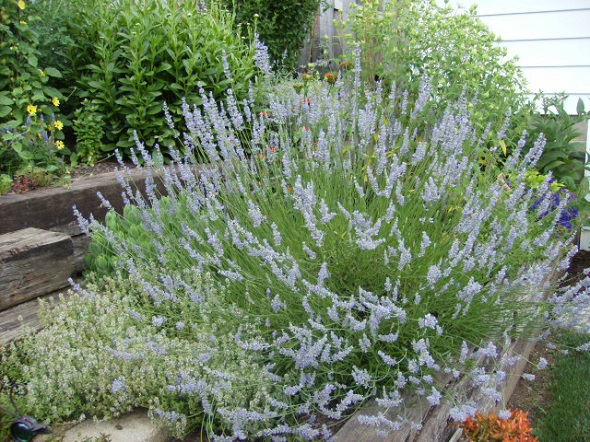
This year in my herb garden, I grew the biggest, most beautiful lavender plant that I have ever grown. Ohio is not the best place to grow lavender, as it usually likes a warmer climate. So many times my lavender has not returned after the winter. This plant was 3 years old and gorgeous! I purchased this lavender plant from companionplants.com who brings wonderful herbs to our annual plant sale every year. I think it was called Grosso Lavender. I harvested every flower and filled a laundry basket with them. I then watched a youtube video (my children would be proud to see that I used technology!) and I learned how to make a lavender wreath. Come into the store and see my creation. I confess it was harder to do than it looked in the video, but after three tries I had a wreath I could enjoy. I love to play in my garden, learning to make things that I can use, and share them with others. What fun!
Another way that I enjoy lavender is in tea. I like the Cup of Calm from Traditional Medicinals. This tea blend contains: passionflower, chamomile, lavender, catnip, rosemary, peppermint, spearmint, licorice, and stevia. It has a mild flavor and is deeply relaxing. I always keep it on the shelf at home and frequently share a cup in the store with someone who is a bit stressed and needs a friend. A box of this tea is the perfect addition to any “care package”, it makes a great gift!
Lavender is probably our best selling essential oil. It is well-known and appreciated for its many qualities. If you can afford only one essential oil, buy lavender. It is balancing, calming, relaxing, and helps you to sleep. Lavender oil is also anti-inflammatory, antibacterial, antiviral, antispasmodic, analgesic, and stimulating to the immune system. Lavender is great to have in a first aid kit, useful for wounds, rashes, bites, and burns. It is one of the essential oils that you can use “neat” or directly on the skin. It is often used in personal care products and works well in a diffuser for aromatherapy. Lavender is an excellent choice for use with children or the elderly.
Tension Headaches Inhaler – Open the empty inhaler and drop the essential oils directly onto the wick. Use 8 drops lavender, 5 drops marjoram, and 3 drops peppermint essential oil. Close tightly. To use the inhaler: slide off the cover, with one finger press closed the left nostril, inhale from the tube into the right nostril. Repeat on other side. Exhale thru the mouth. Repeat both sides again. Inhale as needed to ease headache, clear the brain, and lessen tension.
We carry the empty inhalers, and would be happy to assist you to make an inhaler at our “Blend Your Own Essential Oils Bar”. Stop in to the store and learn how to create something you can use yourself or give as a gift.

Women's Herbal Tea Recipe
This herbal tea has traditionally been used worldwide for its toning and nourishing qualities during pregnancy, breastfeeding, PMS and menopause.
This herbal tea has traditionally been used worldwide for its toning and nourishing qualities during pregnancy, breastfeeding, PMS and menopause.
To prepare tea: Mix the following herbs together and store in an airtight jar. Use ¼ cup of the herbs in a quart jar, cover with boiling water. Cover the jar and leave overnight. In the morning, strain tea, discarding the used herbs. You may dilute or sweeten tea if you like. Drink the quart of tea throughout the day.
Use 1 cup each: alfalfa, nettles, oatstraw, red raspberry leaves and ½ cup rose hips. My good friend likes to add peppermint leaves and stevia leaves to her tea mix, so you might want to try that variation too.
Alfalfa: one of the richest mineral foods in the world, contains calcium, magnesium, phosphorus, potassium, chlorophyll, biotin, chlorine, inositol, iron, PABA, sodium, sulfur, tryptophan, vitamins A, B complex, C E, and K. Restorative tonic which promotes pituitary gland function. It alkalizes the body, helping with arthritis, gout, and kidney function. It tones the intestines. Alfalfa is high in tryptophan, inducing better sleep. It is also antifungal.
Nettles: rich in chlorophyll, it contains iodine, magnesium, potassium, silicon, sodium, sulfur, vitamins A and C, facilitates absorption of vitamin D from the sun, proteins, iron and copper. Nettles tone and rebuild the adrenals. They help with energy levels, allergies, and kidneys. Nettles also improve muscle tone, reducing post-partum hemorrhage and vaginal tears. It promotes abundant breast milk. Nettles improve liver function, reducing jaundice, stabilizing blood sugar, and strengthening the nervous and immune systems.
Oatstraw: builds a strong resilient body, it contains calcium, high in vitamins A, C, B complex, phosphorus, potassium, and proteins. Oatstraw contains Avenin, an alkaloid which is highly nutritive to cells, improving reproduction. It is a premier food for the brain and nervous system, reducing anxiety, epilepsy, and assists addiction recovery. Oatstraw improves muscle tone, digestion, uterine function, back weakness, reducing leg cramps, and heart palpatations.
Red Raspberry: the most well-known pregnancy herb, it contains citric and malic acid, silicon, vitamins C, B, niacin, carotene, magnesium, manganese, molybdenum, selenium, and improves vitamin D absorption. Red raspberry tones the muscles, especially in the uterus, reducing spasms and improving labor contractions. It tones and nourishes the ovaries and is beneficial to the pituitary gland, helping to reduce nausea and morning sickness. It is also useful for menstrual cramps and hot flashes. Due to its astringent qualities, it is used for mouth ulcers, bleeding gums, hemorrhage, hemorrhoids and cold sores. Its high mineral content promotes healthy nails, bones, teeth, and skin. Red raspberry is an excellent tea for children with a natural source of vitamin C to help fight off a cold.
Rose Hips: a good all-around tonic, specifically used for the blood, nerves, and heart. Rose hips are excellent for nervous and stressful situations. It contains vitamins A, C, E, rutin and sodium. With high amounts of calcium, iron, selenium, magnesium, potassium, manganese, sulphur, and silicon. Trace amounts of vitamin D and zinc.