Women’s Herbs in the Garden
My medicinal herb garden is really growing strong this year. I guess we have had just the right combination of warmth and rain for the plants to thrive. I want to share with you about several herbs that are good for women and easy to grow in your own backyard. Have fun growing these!
Angelica – Angelica archangelica, is a biennial. The second year in the sunny garden it grows tall with beautiful purplish stalks, and is a striking showpiece. The root is what is used as medicine. It is a warming, tonic herb; useful for digestion, intestinal cramps, fevers, lung congestion, and feelings of stagnant depression. Externally, it may be applied for bruises, sprains, muscle or joint pain. As a valuable remedy for women, it helps to regulate menses and balance hormones. Angelica gets things moving! Contraindicated for heavy menstrual bleeding and not for use during pregnancy or nursing.
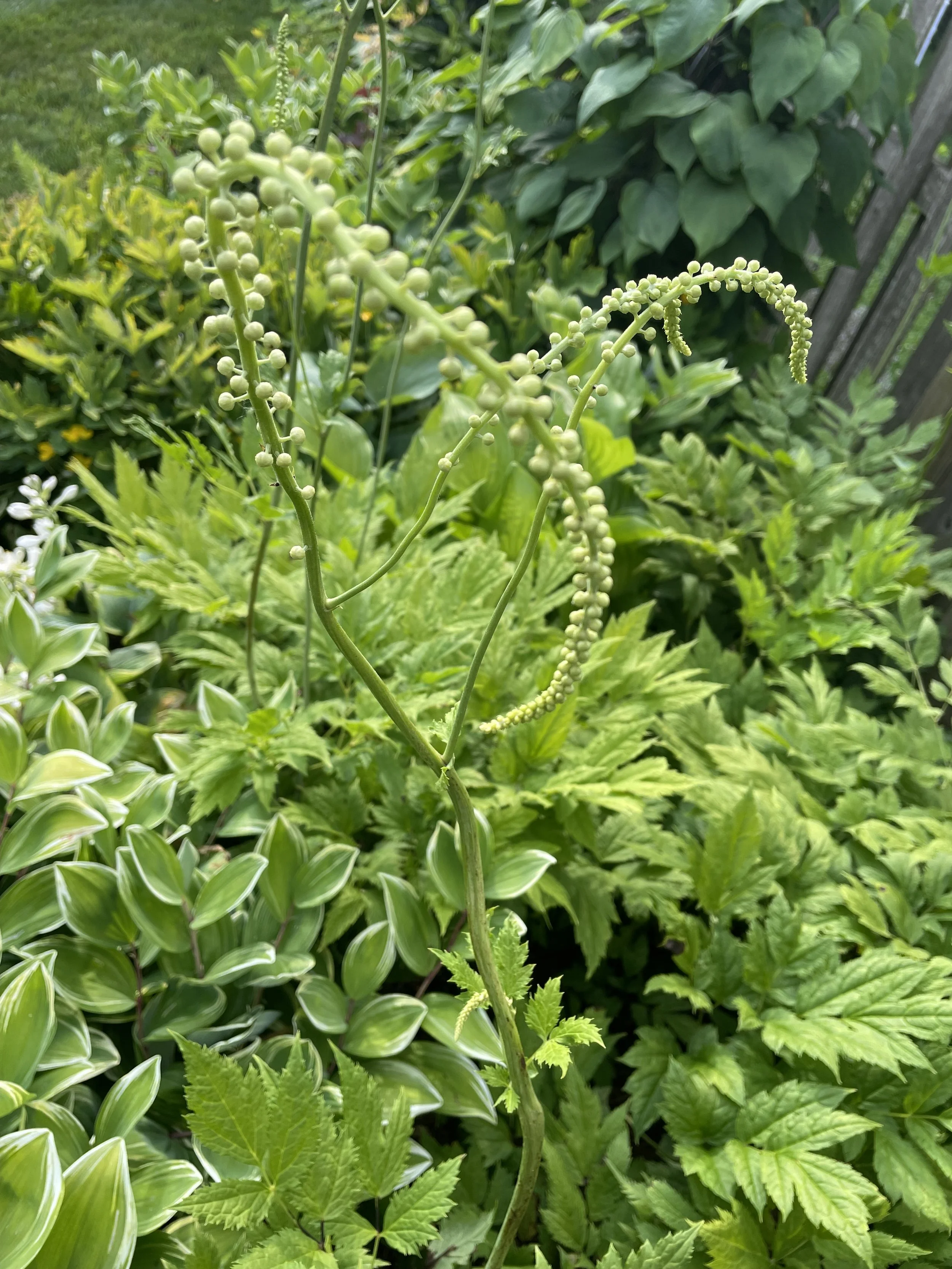
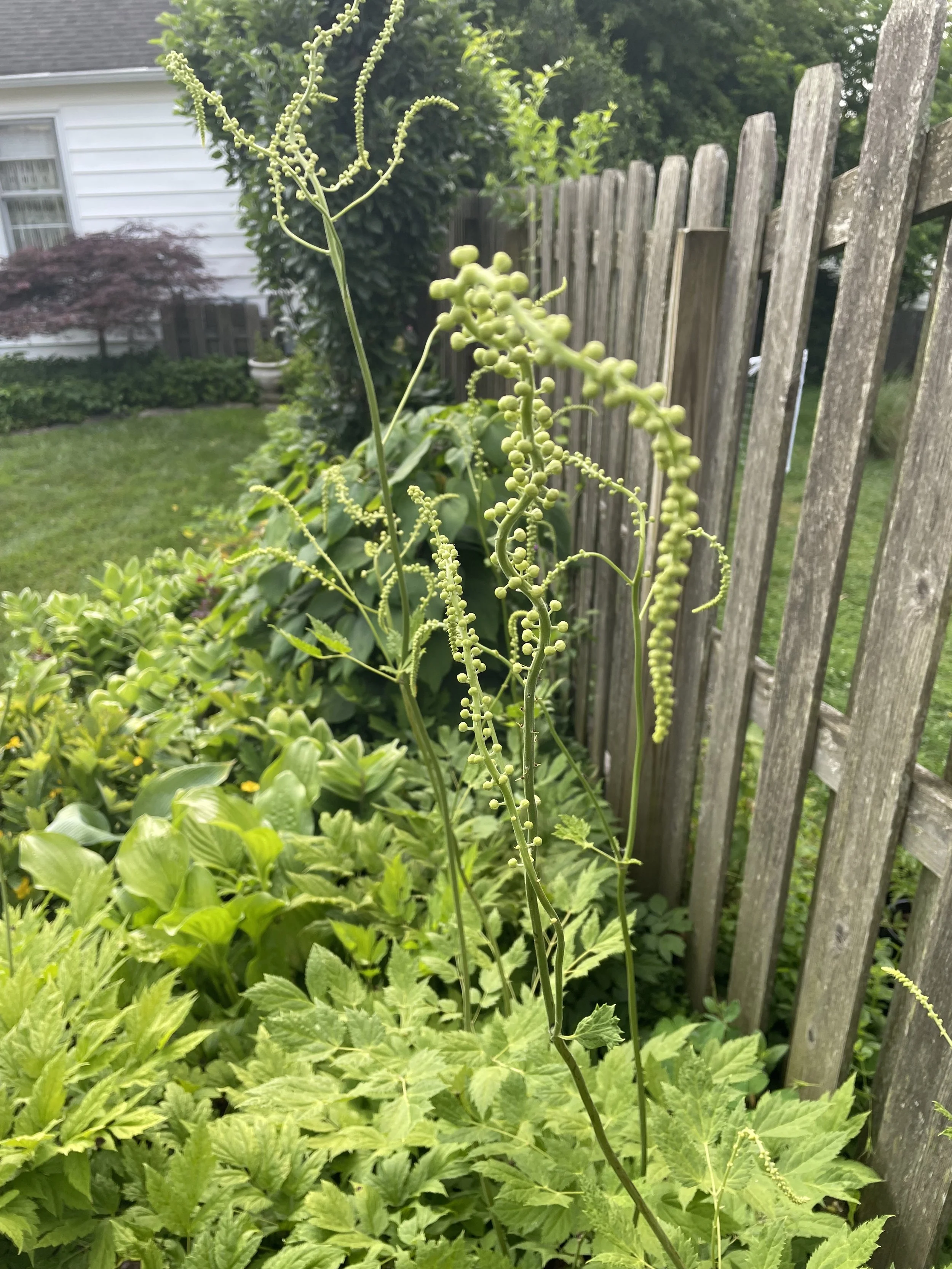
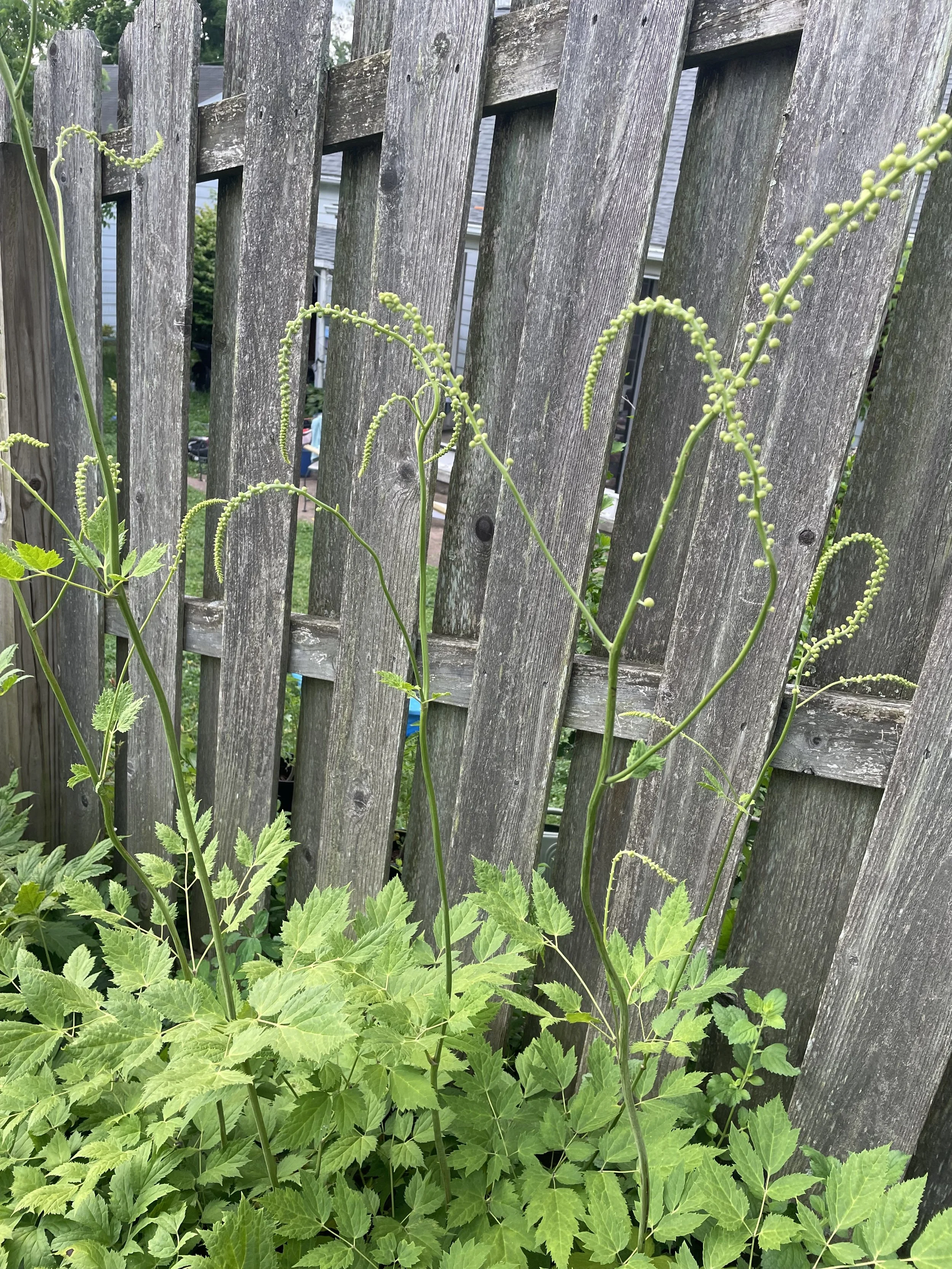
Black Cohosh – Cimicifuga racemosa, is a shade-loving perennial with lacey leaves. It sends up twisting stalks with white flowers, that somehow remind me of fireworks. Native to North America, the root is what is used for medicine. Black cohosh has a long tradition as an estrogenic herb; however, it isn’t actually a source of estrogen. It does help with menopausal symptoms and is known as the top herb for balancing hormones. Black cohosh also is antispasmodic, analgesic, lowers blood pressure, reduces join inflammation, and enhances circulation. Energetically it is cooling and relaxing. It is helpful for dark, twisted emotions and feelings of gloomy depression. Large doses can cause headaches or dizziness. Black cohosh stimulates uterine contractions, so should not be used in pregnancy, unless intentionally during the last days of pregnancy or labor.
Blue Cohosh – Caulophyllum thalictroides, is a lovely shade perennial, with a blue color which reminds me of eucalyptus. It grows well with black cohosh, and similarly, the root is cooling and relaxing. It is mostly used by midwives to induce delayed labor. It also will induce delayed menstruation. It strengthens contractions and relaxes the uterus, eases the pains of childbirth or cramping. Blue cohosh is also helpful for breast or ovarian pain. Mildly toxic in large doses and should be avoided in pregnancy or if trying to become pregnant.
Chaste Tree – Vitex agnus-castus, grows more like a perennial bush than a tree. It is a lovely addition to your landscaping, but give it some room. The flowers are lovely, with a distinctive smell, and the seeds/berries are the part used for medicine. Warming and drying, it is a better remedy for women than men because it inhibits male androgen hormones. Chaste tree balances female hormones, useful for PMS and menopause. It might reduce the effectiveness of birth control pills.
Lady’s Mantle – Alchemilla vulgaris, is a tonic herb for the uterus. Its astringent, drying, and constricting qualities, make it useful for vaginal discharge or heavy menstrual bleeding. It also has a diuretic or antidiarrheal effect. An infused oil of Lady’s Mantle is helpful as a massage oil for fibrocystic breasts. Avoid during pregnancy.
Wild Yam – Dioscorea villosa, is a beautiful and well-behaved vine, with heart-shaped leaves. I love how it grows to 8-10 feet, flowers, and then stops growing! It perfectly grows up a tall metal hook and stays there all summer. No pruning – just beautiful seed pods to enjoy. It is also lovely growing up the trunk of a tree. It likes shade or part sun and returns every year from rhizomes. Energetically it is cooling, moistening, and relaxing. Wild yam has been thought of as a progesterone herb, yet it actually is not a progesterone source. It is analgesic, antispasmodic, and anti-inflammatory; so, it is useful for menstrual cramps, ovarian pain, and intestinal cramps. The root is used for herbal medicine, an overdose may cause diarrhea or vomiting.
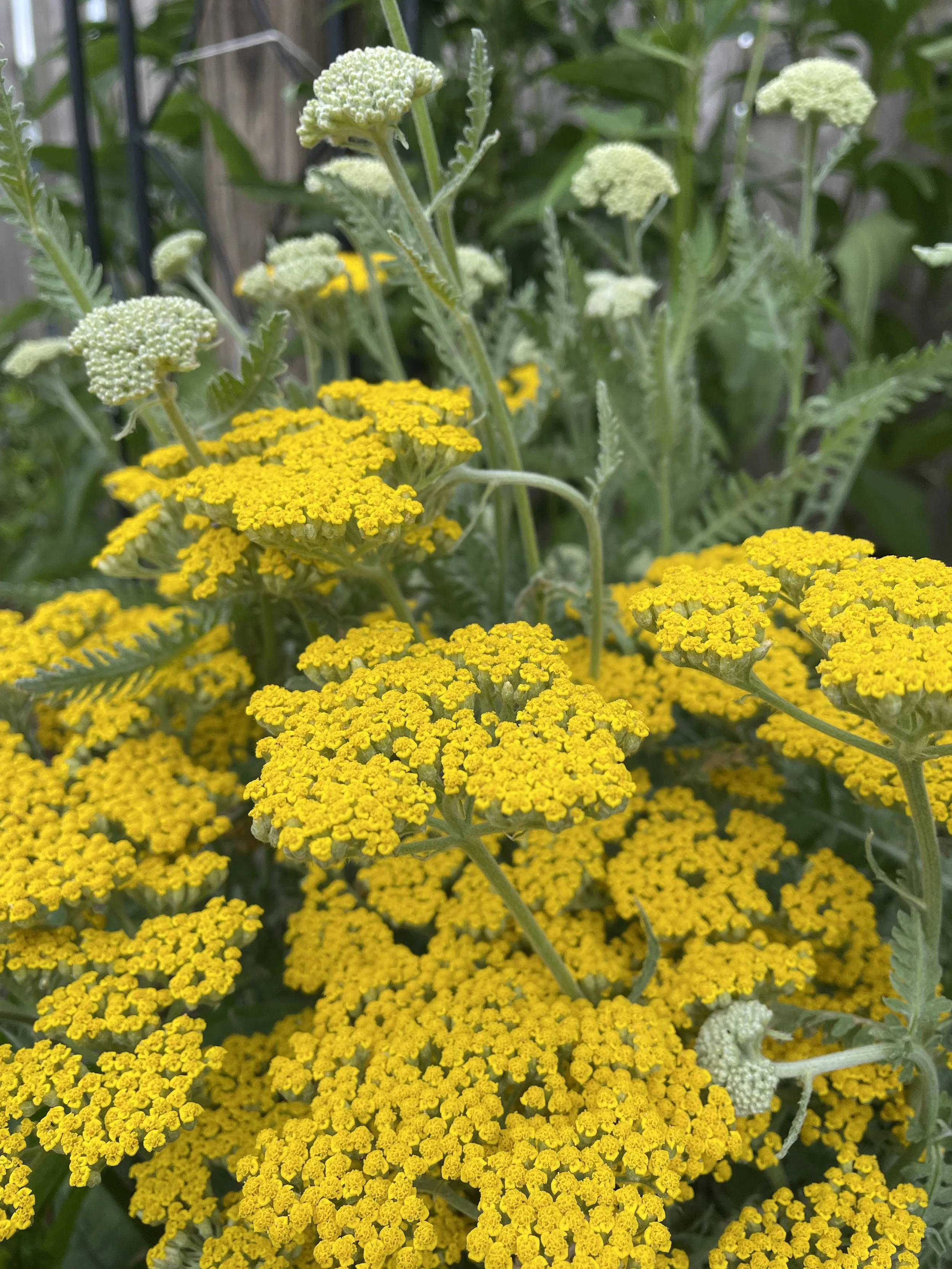
Yarrow – Achillea millefolium, is best known to stop bleeding, both internal and external. A warm tea is one of the best remedies for infection, and is also useful in fevers. Add a bit of peppermint to help with a lightly bitter taste. The flowers are the part used and to get the strongest medicine, yarrow flowers are best harvested after a dry period of weather. Yarrow is cooling, drying, anti-inflammatory, antiviral, diaphoretic, hemostatic, and vulnerary. Wild yarrow flowers are usually white, but many colors are available. I have a lovely yellow one in my garden. The hybrids will still have some medicinal value, although maybe not as strong. The flowers are the part used for herbal medicine. The plants usually grow about 2 feet high and like full sun.