
Take Out the Sting of Allergies with Nettles
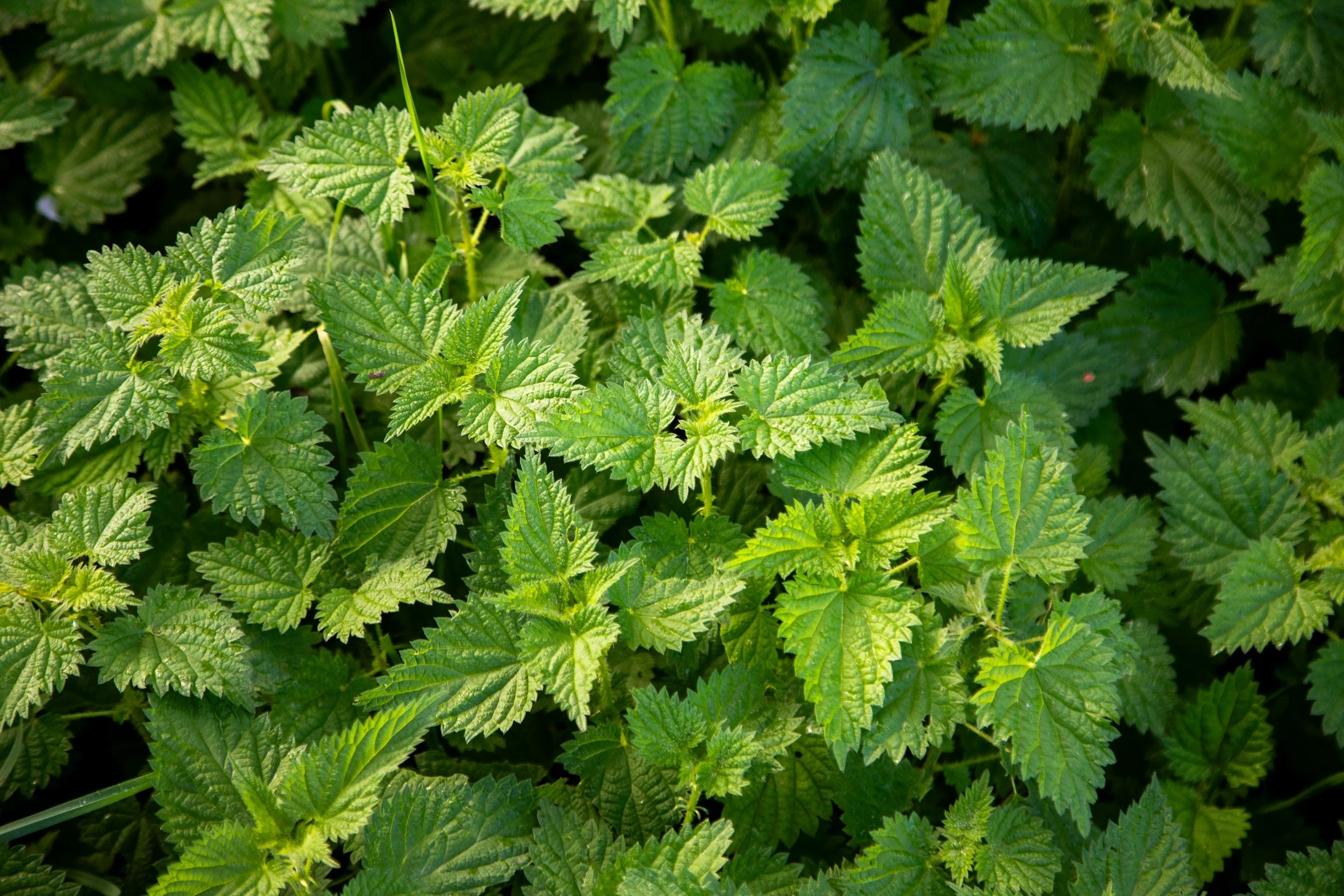
Stinging nettle grows wild in Ohio as a perennial about 2- 5 feet tall. It has lance-shaped leaves and green flowers with yellow stamens. The leaves and stems have fine hairs on them that deliver an irritating and lasting sting. So, wear protective gloves, long sleeves and pants if you are harvesting them for yourself. Interestingly enough, the juice of the nettle plant is the antidote for the sting. You can also use yellow dock, which probably grows nearby, to soothe the sting.
Nettles have many health benefits, beginning with being highly nutritious. They are excellent added into soups, an omelet, or even your spaghetti sauce. Nettles add mineral content without changing the flavor of your food, but they should not be eaten raw. Nettle leaves are high in calcium, phosphorus, iron, and vitamins D & K. Nettles are helpful in building the immune system, strengthening the body, and giving you more energy. Nettle is frequently recommended in pregnancy: to enrich the blood, to aid the kidneys, ease leg cramps, prevent hemorrhage after birth, reduce hemorrhoids, and increase breast milk. Nettle root is effective in restoring thinning hair; improving skin and scalp health.
Nettle is well-known to support respiratory health and nasal congestion. With anti-inflammatory properties, many people rely on nettles to give them allergy relief. They are best taken daily, just one or two capsules a day, for about a month before the allergy season begins. To help alleviate spring and fall pollen allergies, continue with nettles daily, and watch your symptoms slowly disappear. Stinging nettle increases the production of T cells, immune cells that act as a control mechanism on other immune cells that cause allergic reactions. Some people they notice that in subsequent years, they have less allergy problems, because the respiratory system begins functioning correctly.
A combination of nettle leaf tea and nettle seed tincture taken daily is often recommended by herbalists to improve kidney function. Nettle has a strong astringent action and is high in vitamin K, both which help to stop bleeding. Because of its anti-inflammatory action it is helpful for arthritis pain. Nettle root is often used in combination with Saw Palmetto for a swollen prostate gland and to help reduce nightly trips to the bathroom. Nettle seed has been traditionally used to strengthen kidneys, adrenals, and the thyroid.
Nettle is a diuretic and will remove potassium from the body, so if taken regularly, you should eat foods high in potassium or supplement it. Caution should be taken with combining nettles with prescription medications used for diabetes, high blood pressure, inflammation, or sedatives.